

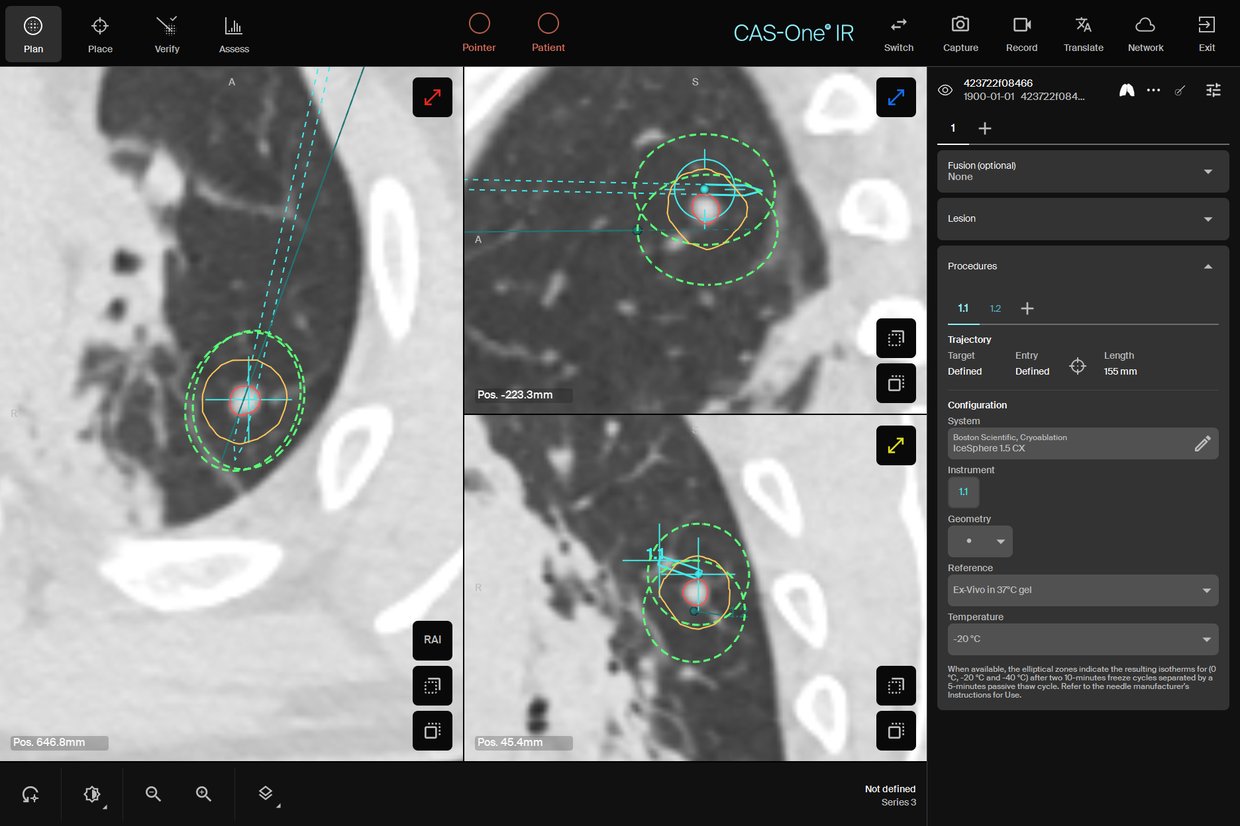
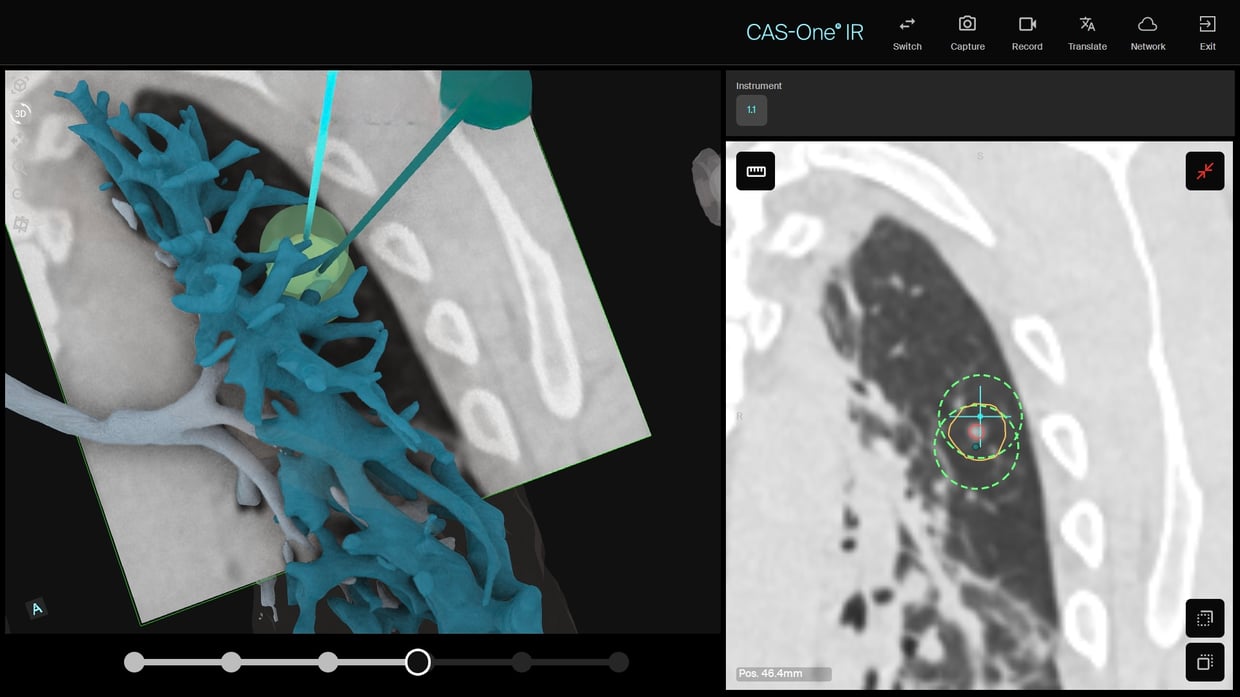
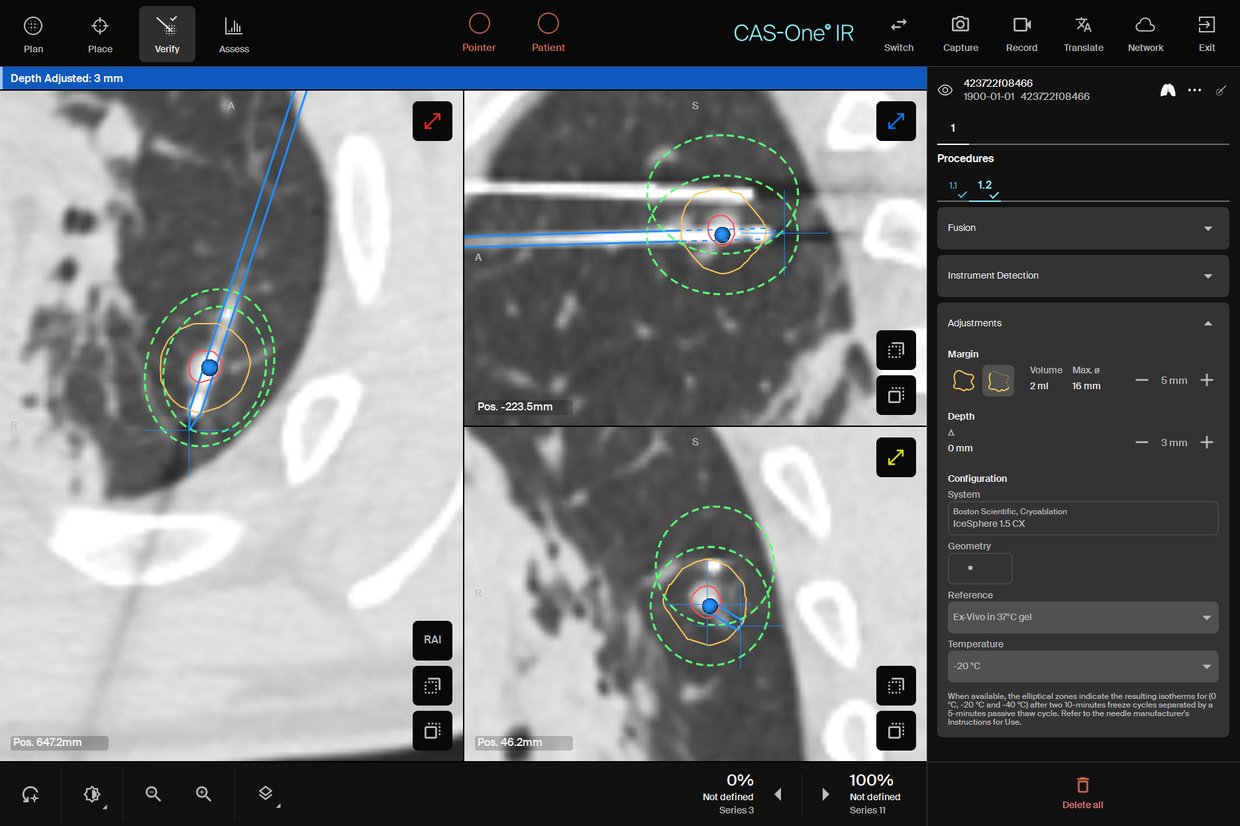
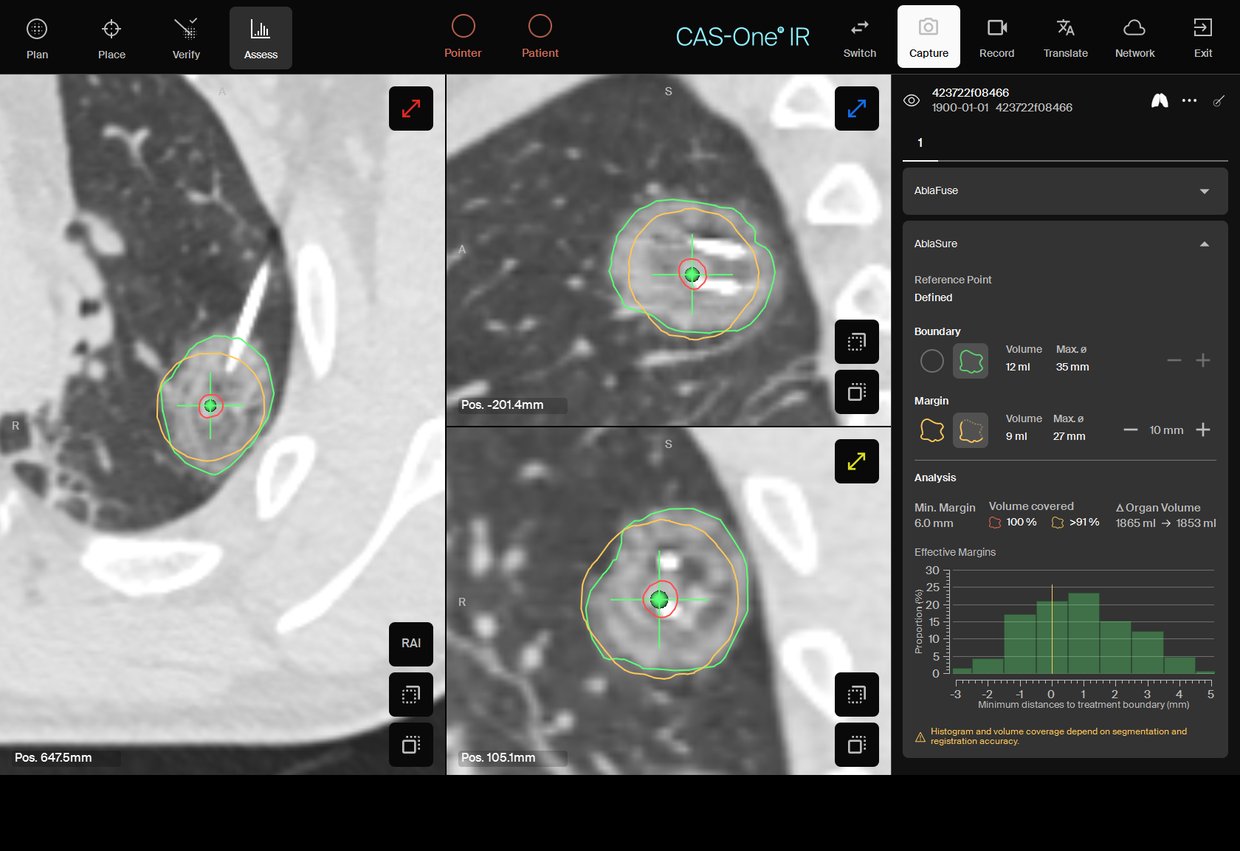
A 51-year-old patient with testicular leiomyosarcoma first diagnosed in August 2022, got two new metastases on the left lung, found in July 2026. Because the patient received SBRT previously on these mets, the decision was made to now treat these lesions with cryoablation. This was a first for this hospital and they decided to use CAS-One IR, where previously they only had experience with liver ablation. The needle insertion caused some movement in the lung, which was easily corrected by AblaFuse, and the post ablation confirmation with AblaSure confirmed a 6mm MAM. The procedure was done in less than two hours, and the patient was discharged the following day.
Name: Dr. Michal Mauda-Havakuk & Dr. Rina Neemann
Institution: Tel-Aviv Sourasky Medical Center, Ichilov, Israel
Patient age and sex: Male, 51-years-old
- Diagnosed with testicular leiomyosarcoma in August 2022
- Received radiation therapy in November 2022
- Patient received chemotherapy in April 2024
- SBRT for multiple left lung metastases in March, April and November 2025
- Two of these metastasis were noticed to grow by July 2026
- Cryoablation for these tumors was now preferred due to the toxicity of a new SBRT session, and was performed in September 2026
- The procedure was performed under general anesthesia and single lung ventilation.
- Cryoablation was performed with IceSphere probes (Boston Scientific)
- Only the first lesion was done with CAS-One IR. The second was placed freehand due to atelectasis provoked by the mechanic ventilation causing poor visibility.
- The two probes were accurately positioned on the first try.
- Treatment was done in under two hours counting the 30-minute treatment of 3 / 7 / 10 minute cycles.
- The second lesion was treated successfully free-hand, and a pneumothorax appeared after the second treatment.
- Automatic fusion with AblaFuse was used to correct the small movement due to needle insertion.
- AblaSure showed a complete coverage of the lesion and a 6mm effective margin, knowing that the Iceball is always underestimated in lungs.
- A drain was positioned to evacuate the pneumothorax that appeared after treatment of the second lesion.
- The patient was discharged the next day after successful retrieval of the drain.