

A 21-year old female presented with typical nocturnal foot pain partially relieved by aspirin, ultimately diagnosed with an osteoid osteoma of the fifth tarsal bone. Imaging confirmed a sclerotic lesion with a nidus and associated bone marrow edema. The patient was treated with CT-guided cryoablation using CAS-One IR. This included planning and navigation, as well as holding and guiding a bone drill. Despite a minor skin-related complication, the procedure resulted in complete resolution of nocturnal pain and radiological resolution of bone marrow edema at three months, with only mild residual soft tissue changes.
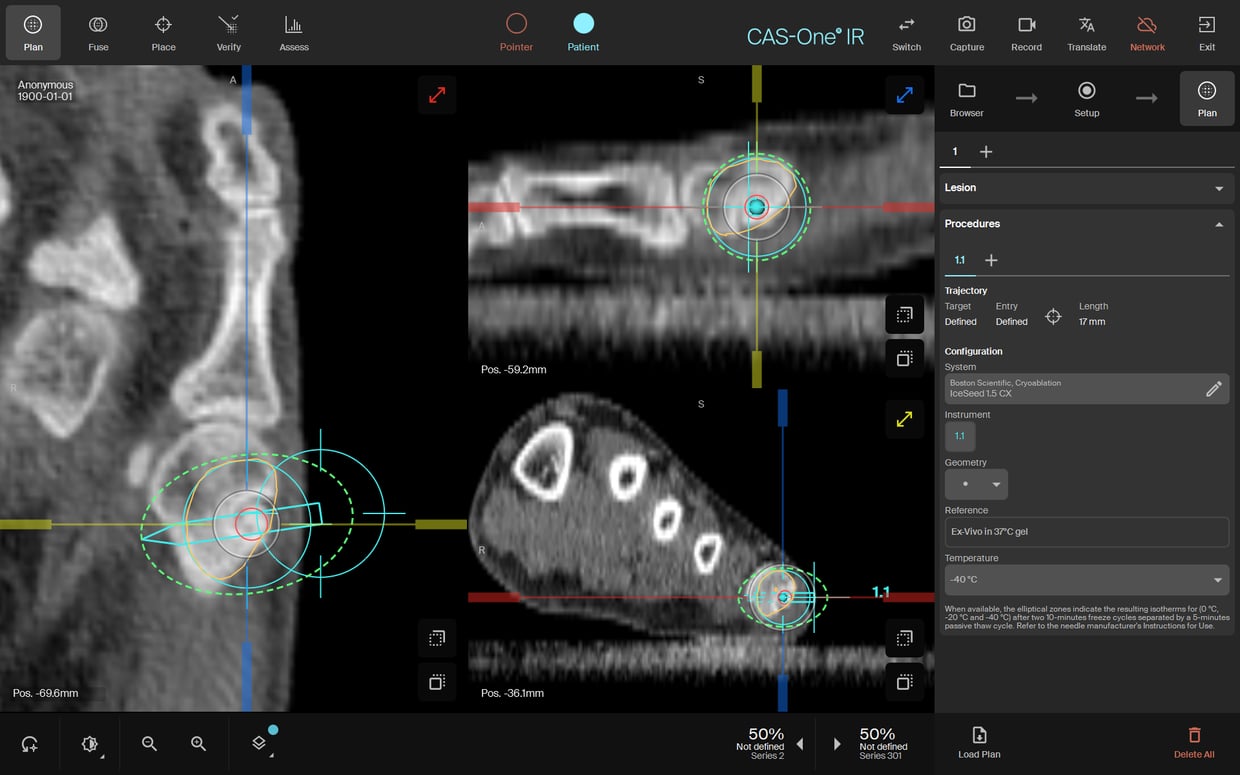 Planning of the trajectory and estimated cryoabaltion zone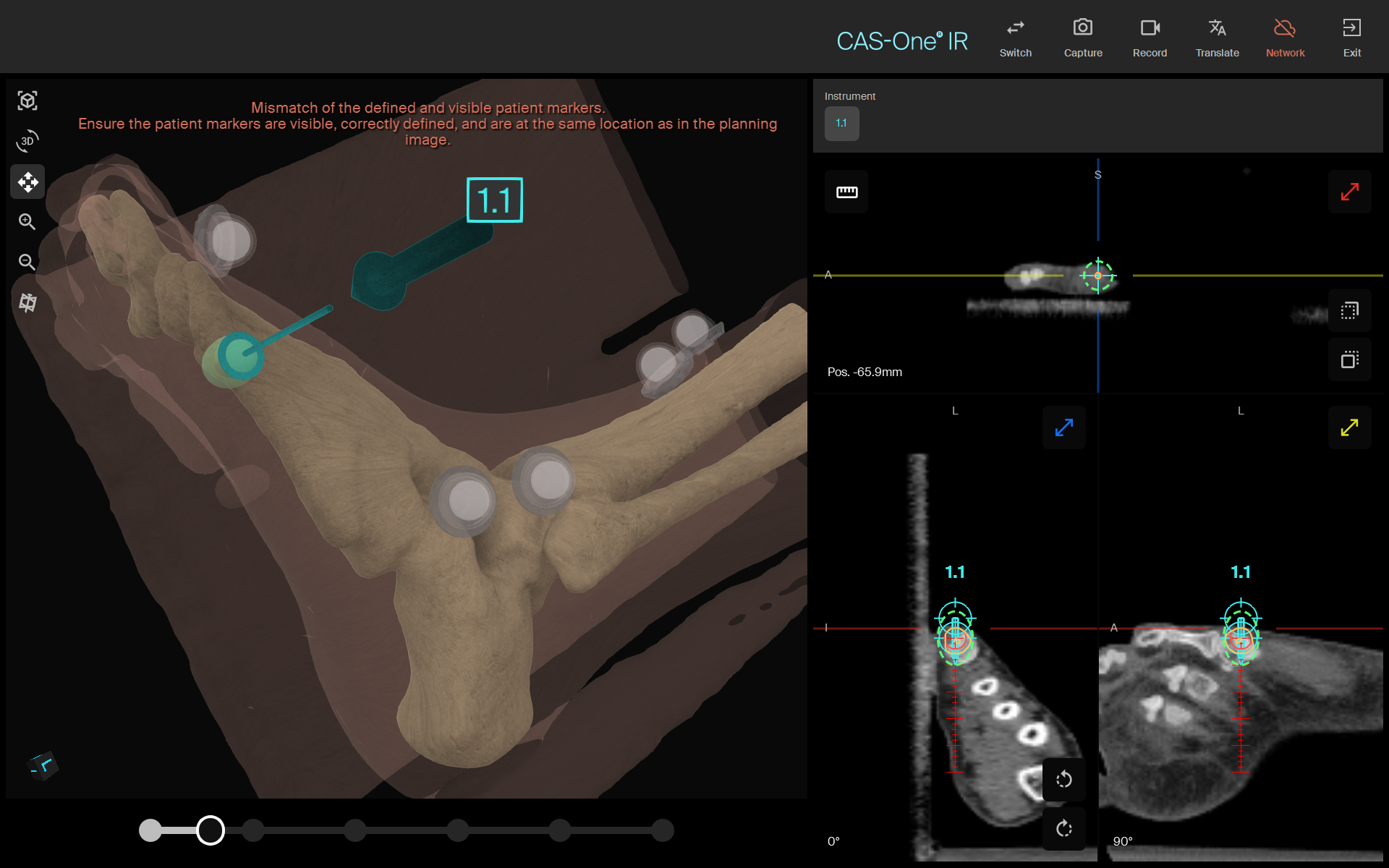
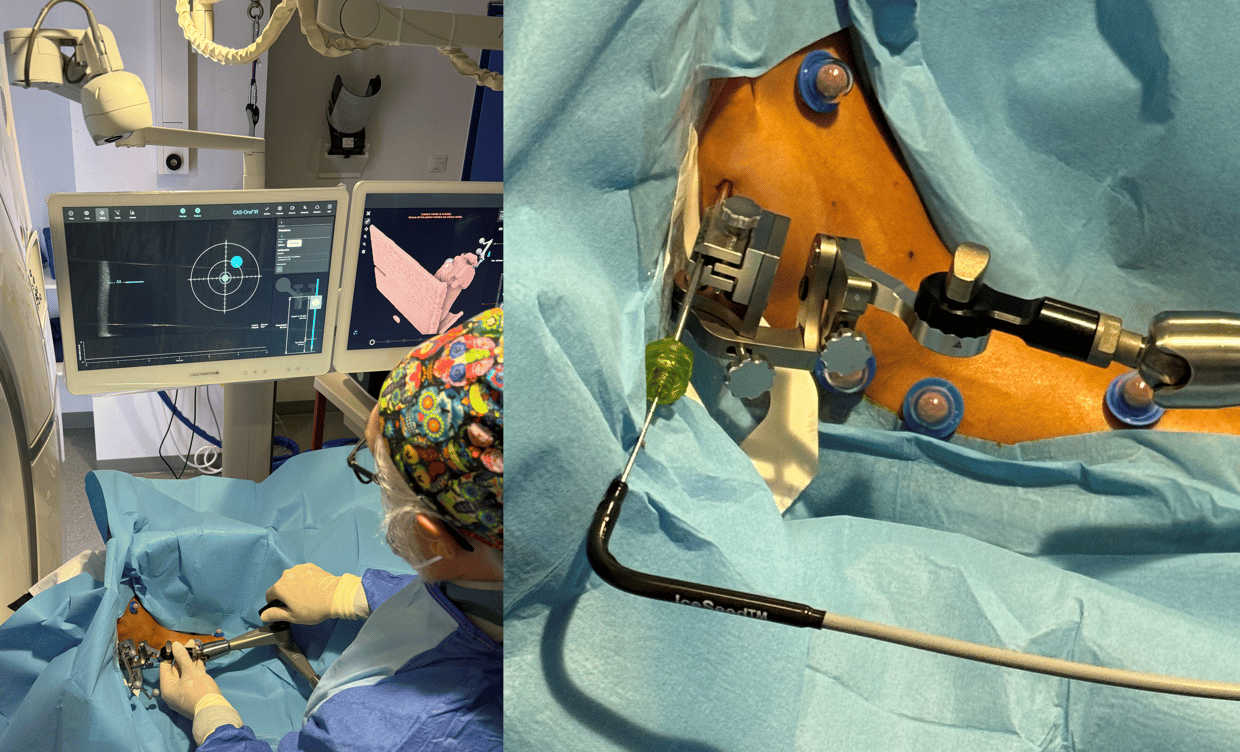
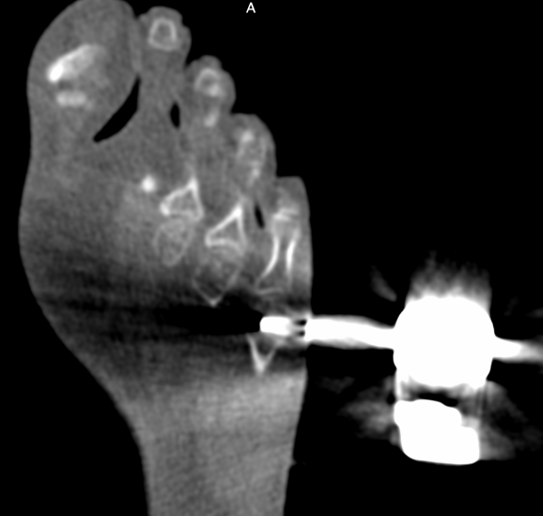
Alignment of the aiming device (done as a three slice fluoro to reduce radiation)
Name: Dr. Carlo Mario Tappero
Institution: HFR Fribourg, Switzerland
Patient age and sex: Female, 21 years-old
-
Nocturnal foot pain during sleep
-
Rapid and reliable pain relief with aspirin and other anti-inflammatory medication
-
Only minimal pain during daytime
-
Clinical suspicion of osteoid osteoma based on symptom pattern
-
X-ray of the foot showed a sclerotic area with a visible nidus
-
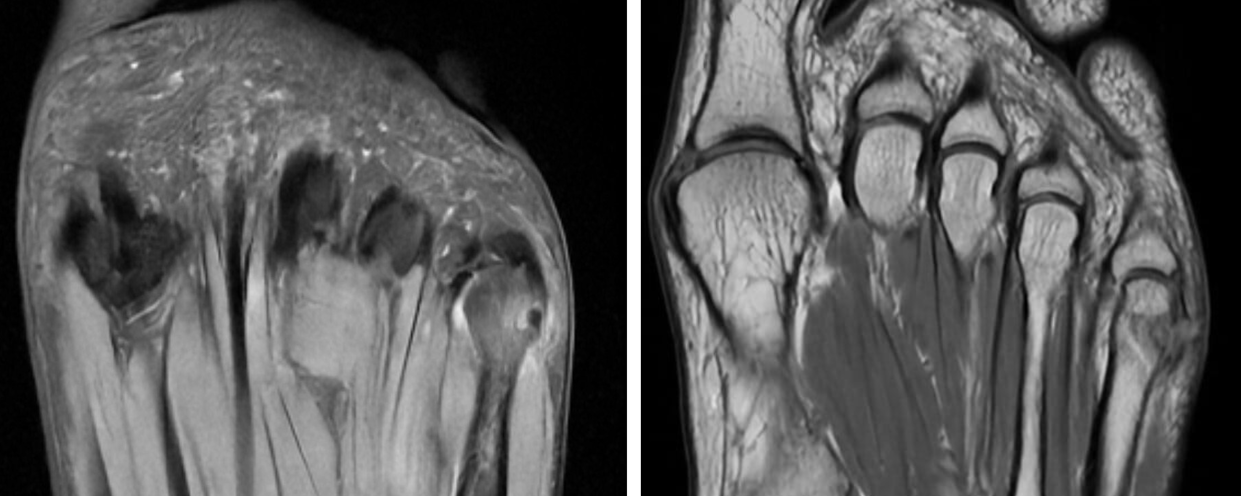
MRI confirmed the lesion in the fifth tarsal bone with associated bone marrow edema
- Multidisciplinary discussion with orthopedic surgeons led to the decision to perform cryoablation
-
Subcutaneous injection of 10ml ropivacaine to increase separation between bone and surrounding soft tissue.
-
IceSeed cryoprobe (Boston Scientific) introduced through the biopsy needle
-
Cryoablation performed for 10 minutes at 60% energy
-
Skin care included, during freezing, both withdrawing the biopsy needle to avoid skin contact and keeping warm water-filled gloves around the foot, as well as applying a warm dressing post-procedure
- Histopathology confirmed a benign tumor consistent with osteoid osteoma
- Mild skin injury related to cryoablation with delayed healing over the first three weeks
- Minor superficial frostbite-type skin changes treated successfully with topical ointment, resulting in complete wound healing
-
Three months post-procedure MRI resulted in no residual bone marrow edema, no remaining osseous lesion, mild persistent edema and inflammation of the surrounding soft tissues, mild residual pain during walking and slight persistent skin redness
-
Dr. Carlo Tappero said about this case "CAS-One IR makes treating these small tumors quote easy, especially when precise bone-drilling is needed in small parts of anatomy where milimeters of error cannot be sacrificed"
