

An 81-year-old man with adenocarcinoma of the ampulla of Vater (pT3b pN2) underwent a spleen-preserving total pancreatectomy. The postoperative course was complicated by a superinfected paragastric fluid collection associated with residual pancreatic tissue and persistent pancreatic secretion. After initial CT-guided drainage and ongoing pancreatic leakage, percutaneous CT-guided cryoablation with CAS-One IR of the residual pancreatic remnant was performed. Follow-up imaging demonstrated complete ablation of the residual tissue and resolution of the pancreatic fluid collection.
Planning scan (done at 0° to ensure no critical structures would be damaged) shows the planning of the two IceRod™ cryoprobes as well as the placement planning for the drainage catheter needle.
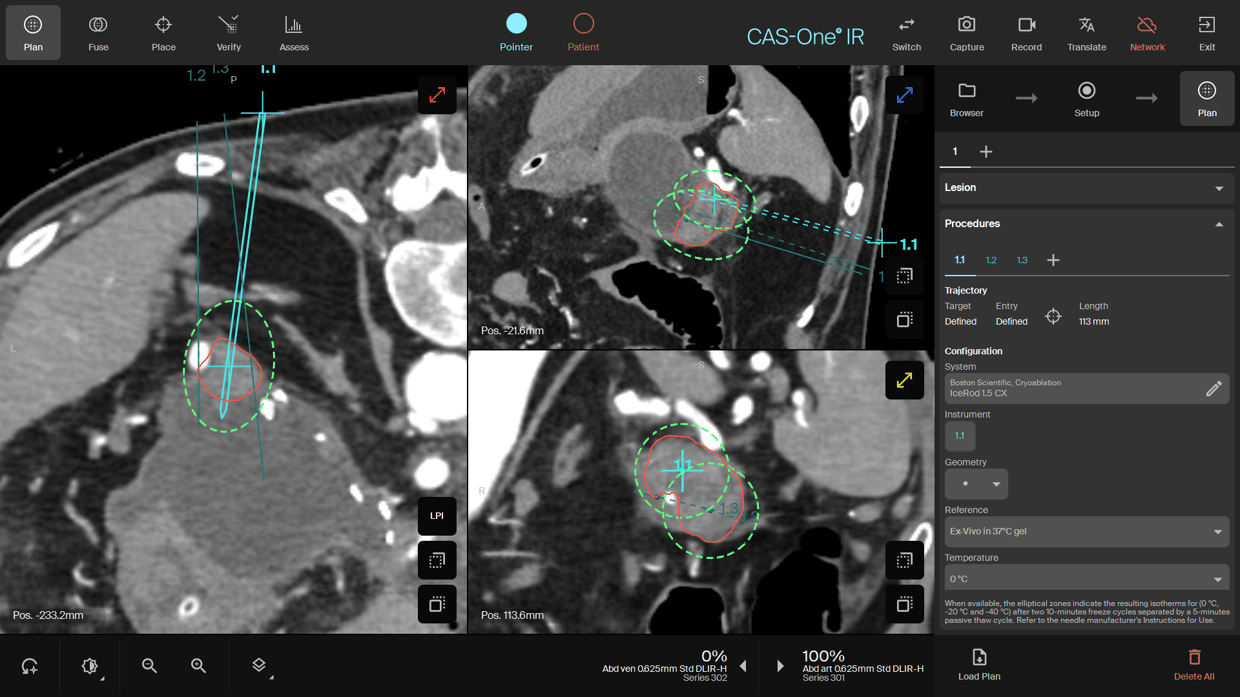 Planning of the cryo probes again at 0°C to assess the safety of the full Ice ball in relations to risky structures.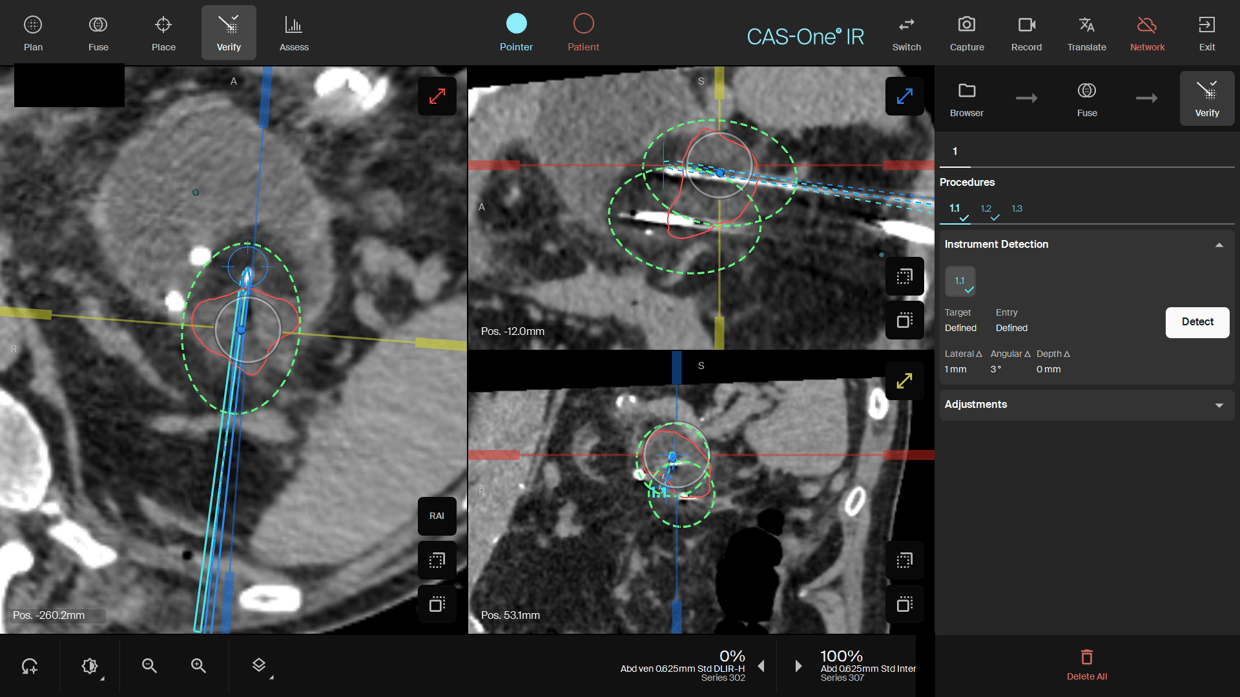
Needle verification scan confirms accurate placement of the cryo antennas. The resulting ice balls demonstrate complete coverage of the residual pancreatic tissue
Comparison of pre-procedural (left) and follow-up imaging (right) shows no residual pancreatic tissue and resolution of the fluid collection
Name: Dr. Levent Kara
Institution: Stadtspital Zürich, Switzerland
Patient age and sex: Male, 81 years-old
Initial condition and Imaging:
- January 2026: patient was diagnosed with an adenocarcinoma of the ampulla of Vater,
pathological stage: pT3b pN2 -
Immediate spleen-preserving total pancreatectomy was performed (Kimura technique)
- Postoperative development of superinfected paragastric fluid collection, associated with residual pancreatic tissue
-
CT-guided drainage successfully performed, however ongoing pancreatic leakage remained
-
After multidisciplinary discussion with the visceral surgery team, the decision was made to perform percutaneous cryoablation of the residual pancreatic tissue with CAS-One IR to control the pancreatic leak
Treatment:
-
Patient positioned prone and under general anesthesia for respiratory motion control.
-
Two IceRod cryoprobes (Boston Scientific) were used to ensure complete coverage of the residual tissue
-
At the end of the cycles, a new drainage catheter was placed to evacuate remaining pancreatic secretions and prevent re-accumulation
-
All probes were planned and placed using CAS-One IR to ensure safe probe positioning, avoidance of critical vascular structures, and complete ice-ball coverage of the pancreatic remnant
Result:
- Follow-up imaging showed complete ablation of the residual pancreatic tissue, with no evidence of viable pancreatic remnants
- Clear resolution of the pancreatic fluid collection
- Drainage got removed after follow-up imaging
- No new complications occurred, and the patient was discharged from the hospital
Conclusion:
-
CAS-One IR enhances procedural accuracy and safety, particularly in anatomically complex regions adjacent to vascular structures
-
Dr. Levent Kara said about this case "CAS-One IR transformed a potentially high-risk intervention into a controlled and predictable procedure"
Learn more about CAS-One IR.
